
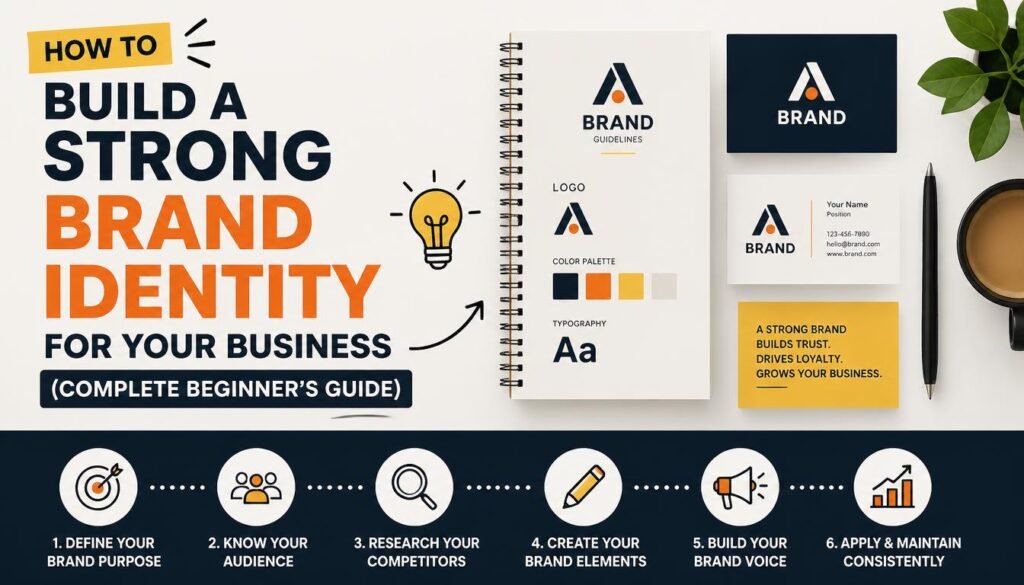
A strong brand identity helps your business stand out in a competitive market. It is much more than a logo or a catchy slogan. Your brand identity includes your values, personality, visual style, messaging, customer experience, and reputation.
Whether you own a small business, startup, online store, local company, or personal brand, building a consistent brand identity creates trust and encourages customers to choose your products or services over competitors.
In this guide, you will learn how to build a strong brand identity step by step using simple strategies that work for businesses of every size.
What Is Brand Identity?
Brand identity is the collection of visual and emotional elements that represent your business. It is how customers recognize, remember, and connect with your brand.
A complete brand identity includes:
- Brand name
- Business logo
- Color palette
- Typography
- Brand voice
- Mission statement
- Core values
- Visual identity
- Packaging
- Website design
- Social media presence
- Customer experience
A strong identity helps people immediately recognize your business whenever they see your content, products, or advertisements.
Why Brand Identity Is Important
A well-developed brand identity offers many benefits.
Builds Customer Trust
People buy from brands they trust. Professional branding makes your business appear reliable and credible.
Improves Brand Recognition
Consistent branding helps customers remember your company even after seeing it only a few times.
Creates Customer Loyalty
Customers who connect emotionally with your brand are more likely to return and recommend your business.
Increases Business Value
A recognizable brand often commands higher prices because customers perceive greater value.
Supports Marketing
Clear branding makes your SEO, social media marketing, email campaigns, and advertising more effective.
Step 1: Define Your Brand Purpose
Every successful brand starts with a clear purpose.
Ask yourself:
- Why does this business exist?
- What problems do we solve?
- Who do we help?
- What makes us different?
Your purpose should guide every branding decision.
Example
Instead of saying:
“We sell shoes.”
Say:
“We help busy professionals find comfortable shoes that look stylish and last longer.”
This creates a stronger emotional connection.
Step 2: Identify Your Target Audience
You cannot build a successful brand if you try to serve everyone.
Identify your ideal customer.
Consider:
- Age
- Gender
- Income
- Education
- Interests
- Lifestyle
- Buying habits
- Pain points
- Goals
Create a customer persona.
Example:
Name: Sarah
- Age: 30
- Occupation: Marketing Manager
- Needs affordable, quality products
- Shops online
- Values fast delivery
- Prefers trusted brands
Knowing your audience helps create better products, messaging, and marketing campaigns.
Step 3: Study Your Competitors
Competitor research shows what already exists in the market.
Look at competitors’:
- Logo
- Website
- Pricing
- Customer reviews
- Social media
- Brand messaging
- Product quality
- Marketing strategy
Find gaps where your business can offer something better.
Never copy another brand.
Instead, discover what makes your business unique.
Step 4: Create Your Brand Mission and Vision
Your mission explains what you do today.
Example:
“Our mission is to provide affordable eco-friendly products that improve everyday living.”
Your vision describes the future.
Example:
“To become the world’s most trusted sustainable lifestyle brand.”
A clear mission and vision inspire employees and customers alike.
Step 5: Define Your Brand Values
Brand values guide your decisions.
Common business values include:
- Honesty
- Innovation
- Quality
- Sustainability
- Customer satisfaction
- Transparency
- Creativity
- Reliability
- Simplicity
- Community
Customers increasingly support businesses whose values match their own.
Step 6: Develop Your Brand Personality
Imagine your business as a person.
Would your brand be:
- Friendly?
- Professional?
- Luxury?
- Fun?
- Innovative?
- Helpful?
- Creative?
- Bold?
Your personality influences every customer interaction.
For example:
A law firm usually sounds professional.
A toy company sounds playful.
A fitness brand sounds motivating.
Step 7: Choose a Memorable Brand Name
A great brand name should be:
- Easy to pronounce
- Easy to spell
- Memorable
- Unique
- Relevant
- Available as a domain name
Avoid overly complicated names.
Short names are usually easier to remember.
Step 8: Design a Professional Logo
Your logo becomes the face of your business.
Good logos are:
- Simple
- Scalable
- Timeless
- Easy to recognize
- Suitable for print and digital use
Remember that your logo should reflect your brand personality.
Step 9: Select Brand Colors
Colors influence emotions.
Examples include:
- Blue = Trust
- Green = Nature
- Red = Energy
- Black = Luxury
- Orange = Creativity
- Purple = Innovation
- Yellow = Optimism
Use a consistent color palette across your website, packaging, and marketing materials.
Step 10: Pick Brand Fonts
Typography also shapes brand perception.
Choose fonts that are:
- Easy to read
- Professional
- Consistent
- Mobile-friendly
Limit yourself to two or three fonts for consistency.
Step 11: Create Your Brand Voice
Your brand voice is how your business communicates.
Decide whether your tone is:
- Friendly
- Helpful
- Professional
- Educational
- Casual
- Inspirational
Keep your voice consistent across:
- Website
- Blog
- Social media
- Emails
- Advertisements
- Customer support
Consistency builds familiarity.
Step 12: Build a Professional Website
Your website is often the first impression customers have.
Include:
- Clear homepage
- About page
- Products or services
- Contact page
- FAQs
- Testimonials
- Blog
- Privacy Policy
- Terms of Service
Ensure your website is:
- Mobile responsive
- Fast loading
- Secure (HTTPS)
- Easy to navigate
- SEO optimized
Step 13: Produce High-Quality Content
Content marketing builds authority and trust.
Publish useful content like:
- Blog posts
- Guides
- Tutorials
- Videos
- Infographics
- Case studies
- Customer stories
Helpful content improves SEO and attracts organic traffic from search engines.
Step 14: Stay Consistent Everywhere
Brand consistency is one of the biggest factors in long-term success.
Use the same:
- Logo
- Colors
- Fonts
- Messaging
- Voice
- Style
- Visual elements
Whether someone visits your website or social media profile, your brand should feel familiar.
Step 15: Deliver Excellent Customer Experience
Customers remember how you treat them.
Provide:
- Fast support
- Honest communication
- Easy returns
- Helpful answers
- Quality products
- Reliable delivery
Excellent service strengthens your brand reputation.
Step 16: Build Your Online Presence
Modern businesses need visibility.
Focus on:
- Search Engine Optimization (SEO)
- Google Business Profile
- YouTube
- Email marketing
Choose platforms where your audience spends the most time.
Step 17: Encourage Customer Reviews
Positive reviews increase trust.
Ask satisfied customers to leave reviews after purchase.
Display testimonials on:
- Website
- Landing pages
- Product pages
- Social media
Reviews act as social proof for future buyers.
Step 18: Monitor Brand Performance
Track important metrics like:
- Website traffic
- Brand awareness
- Customer retention
- Conversion rate
- Social media engagement
- Email open rates
- Search rankings
- Customer satisfaction
Use analytics to improve your branding strategy over time.
Common Branding Mistakes to Avoid
Many businesses weaken their brand by making avoidable mistakes.
Avoid:
- Copying competitors
- Inconsistent branding
- Poor customer service
- Low-quality visuals
- Ignoring customer feedback
- Frequent logo changes
- Weak messaging
- No brand guidelines
- Overpromising products
- Inactive social media accounts
Practical Example of Strong Brand Identity
Imagine a local coffee shop.
Instead of simply selling coffee, the business creates a complete experience.
Brand identity includes:
- Warm brown colors
- Friendly communication
- Eco-friendly packaging
- Comfortable seating
- Consistent social media posts
- Community events
- High-quality customer service
Customers begin associating the brand with comfort, quality, and friendliness.
That emotional connection builds long-term loyalty.
Tips for Small Businesses
Small businesses can build powerful brands without spending huge amounts.
Start by:
- Knowing your audience
- Creating a simple logo
- Using consistent colors
- Posting valuable content
- Being active on social media
- Providing excellent customer service
- Collecting customer reviews
- Improving your website
- Staying authentic
- Building trust over time
Consistency matters more than a large marketing budget.
SEO Tips for Brand Identity Content
If you publish branding-related content, optimize it by:
- Using your primary keyword naturally.
- Including LSI keywords throughout the article.
- Writing descriptive headings (H2 and H3).
- Creating internal links to related pages.
- Adding relevant external references when appropriate.
- Writing compelling meta titles and descriptions.
- Optimizing images with descriptive alt text.
- Improving page speed and mobile usability.
- Answering common user questions.
- Updating content regularly to keep it fresh.
Frequently Asked Questions
What is the difference between branding and brand identity?
Brand identity is the visual and communication system of your business, while branding is the overall process of shaping how people perceive your company.
Can small businesses build a strong brand?
Yes. A clear mission, consistent messaging, quality products, and excellent customer service can help even small businesses create a memorable brand.
How long does it take to build a brand identity?
Creating the basics may take a few weeks, but building a trusted reputation and strong customer recognition often takes months or years of consistent effort.
Does a logo alone create a brand identity?
No. A logo is only one part of brand identity. Your values, messaging, customer experience, visual style, and consistency all contribute to how customers perceive your business.
Conclusion
Building a strong brand identity is one of the smartest investments you can make for your business. A recognizable and trustworthy brand helps attract customers, increase loyalty, improve marketing performance, and support long-term growth.
Start by defining your purpose, understanding your audience, creating a professional visual identity, and maintaining consistency across every customer touchpoint. Focus on delivering value, communicating clearly, and providing an excellent customer experience. Over time, these efforts will help your business earn trust, stand out from competitors, and build a lasting reputation.