
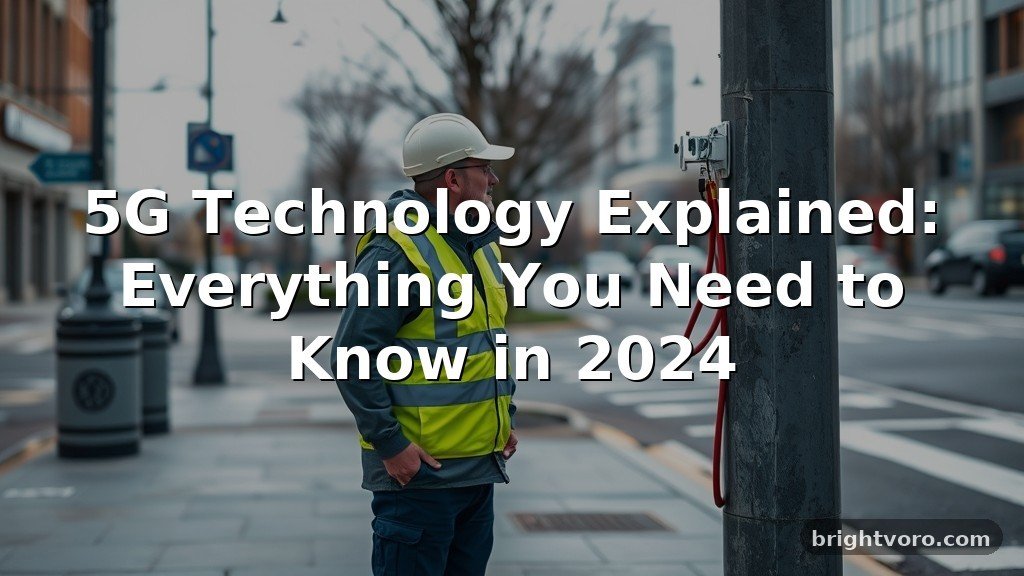
Understanding the evolution of mobile connectivity is essential as we transition into an era defined by hyper-connectivity. 5G technology represents the fifth generation of cellular networks, designed to significantly improve the speed, capacity, and responsiveness of wireless communication compared to its predecessors.
How 5G Technology Works
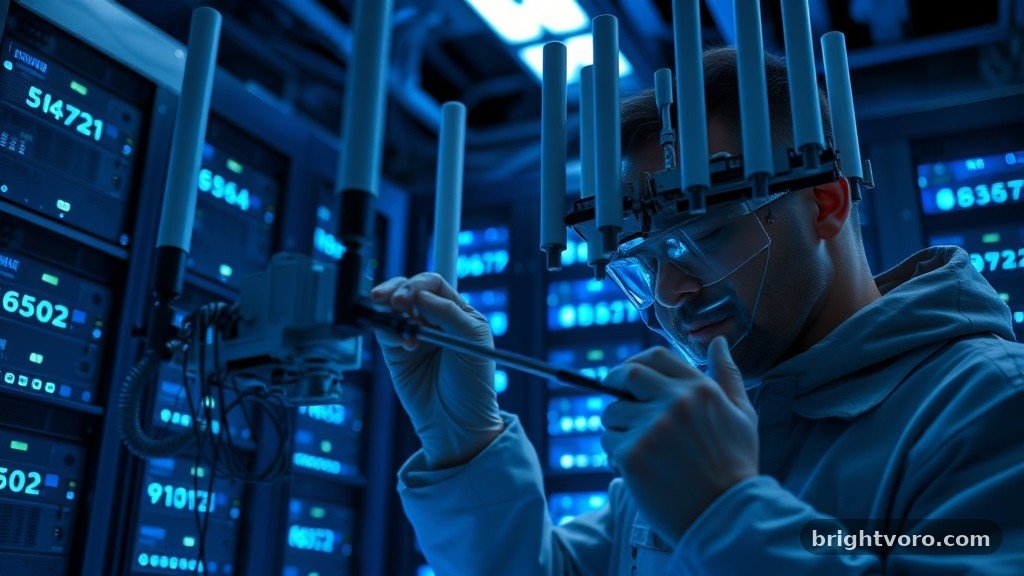
At its core, 5G operates by utilizing a wider range of the radio frequency spectrum. While 4G relied on lower-frequency bands, 5G incorporates higher-frequency waves known as millimeter waves (mmWave). These waves can carry vast amounts of data at incredibly high speeds, though they have a shorter range and struggle to travel through physical obstacles like concrete walls or dense foliage.
To compensate for these limitations, 5G networks employ a dense architecture of small cells rather than relying solely on large, high-powered towers. This infrastructure allows for more efficient data transmission and better coverage in urban environments where demand for mobile access is at its peak.
Key Technical Innovations
Several breakthroughs enable the performance gains seen in modern 5G deployments. These innovations ensure that the network can handle thousands of devices simultaneously without compromising quality or connection stability.
Massive MIMO and Beamforming
One of the most transformative aspects of this technology is Massive MIMO (Multiple Input, Multiple Output). This involves using arrays of antennas at base stations to send and receive more data simultaneously. Combined with beamforming—a technique that directs wireless signals toward specific devices rather than broadcasting in all directions—the network can provide a more dedicated and efficient link to each user.
Reduced Latency
Latency refers to the time it takes for a signal to travel from a device to the server and back. 5G is engineered to minimize this delay to near-instantaneous levels, which is critical for real-time applications like autonomous vehicles, remote surgery, and industrial automation. By processing data closer to the user through edge computing, the network reduces the round-trip time significantly.
Advantages and Challenges
The implementation of 5G offers numerous benefits, but it also presents unique hurdles that engineers and service providers must address.
- Increased Speed: Users can experience download and upload speeds that are significantly faster than 4G, making high-definition streaming and large file transfers nearly instantaneous.
- Network Capacity: The technology supports a massive number of connected devices, which is essential for the growth of the Internet of Things (IoT).
- Physical Obstacles: Because high-frequency signals are easily blocked, network operators must invest in a larger number of small cells to maintain consistent signal strength.
- Security Concerns: As with any transition to new digital infrastructure, ensuring the security of 5G architecture is a primary focus for global regulatory bodies to protect user privacy and sensitive data.
Is 6G on the Horizon?
While 5G is currently being rolled out across the globe, research into the next generation of wireless technology has already begun. Industry groups and academic organizations are currently exploring the potential for 6G, which aims to further integrate artificial intelligence and even higher frequency bands. However, 6G remains in the early research phase, and it is not expected to reach commercial viability for several years.
By leveraging these advancements, society is moving toward a future where the distinction between wired and wireless connectivity continues to blur, enabling new use cases that were previously impossible with older generations of mobile technology.